
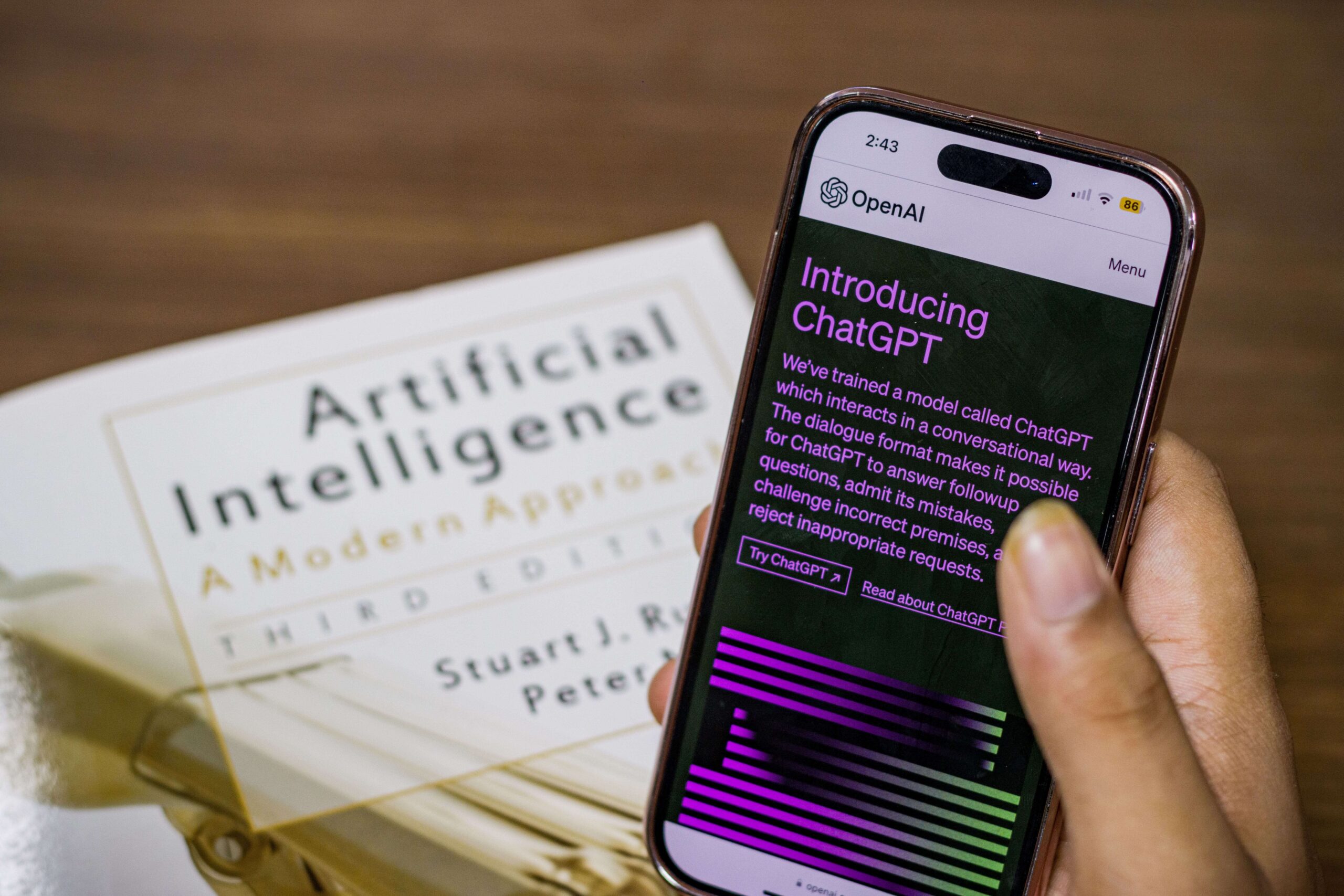
Customers are no longer relying only on Google to discover businesses.
Increasingly, they are asking AI tools questions such as:
- What is the best SEO company for a small business?
- Which digital marketing agency should I hire?
- Who provides local SEO services near me?
- What are the best ecommerce agencies in the USA?
- Which company offers lead generation services?
For businesses, this creates an important new challenge. You might rank reasonably well in traditional search results yet rarely-or never-see your company mentioned when people ask ChatGPT for recommendations.
So why is your business not showing up in ChatGPT? There is no single answer.
ChatGPT Search can use information from the web and multiple signals to identify relevant and reliable sources. OpenAI also makes clear that there is no guaranteed top position. To be eligible for inclusion in ChatGPT Search, however, your website should be publicly accessible and allow OpenAI’s OAI-SearchBot to crawl it.
That means improving your visibility requires more than publishing a few AI-focused blog posts. You need a website that search and AI systems can access, understand, trust, and confidently connect with the topics and services your business offers. This guide explains why your company may be missing from ChatGPT results and what you can do to improve your AI search visibility in 2026.
Can a Business Actually Rank in ChatGPT?
Not in exactly the same way that a webpage ranks in a traditional Google results page.
ChatGPT may provide different answers depending on:
- The exact user question
- Search intent
- Location
- Available web sources
- Freshness
- Relevance
- Reliability
- Context within the conversation
OpenAI states that ChatGPT Search considers multiple factors intended to help users find reliable and relevant information, and there is no way to guarantee top placement. This is why it is more useful to think about AI visibility rather than simply “ChatGPT rankings.”
Your objective should be to make your business more likely to be:
- Discovered
- Understood
- Mentioned
- Referenced
- Cited
- Recommended when relevant
Why Your Business May Not Be Showing Up in ChatGPT
Several factors can reduce your chances of appearing.
1. ChatGPT Cannot Properly Crawl Your Website
This is one of the first things businesses should check. OpenAI uses a crawler called OAI-SearchBot for search discovery.
If your robots.txt file blocks this crawler, your website content may not be available for inclusion in ChatGPT summaries and snippets.
OpenAI specifically recommends allowing OAI-SearchBot if you want your public content to be discoverable and potentially cited in ChatGPT Search.
Your development team should therefore review:
- robots.txt
- Firewall settings
- CDN settings
- Bot protection
- Cloudflare rules
- IP restrictions
- Page-level noindex directives
A website may appear perfectly normal to human visitors while still blocking automated crawlers.
Important distinction: OAI-SearchBot vs GPTBot
These two crawlers have different purposes.
OAI-SearchBot relates to ChatGPT Search discovery.
GPTBot relates to content that may be used for model training.
A business can therefore make content available for ChatGPT Search while separately managing whether it wants that content available for potential training. OpenAI documents these controls separately. That distinction is important because many website owners accidentally block all OpenAI crawlers when they only intended to opt out of training.
2. Your Business Has a Weak Online Entity
AI systems need to understand exactly who your company is. If your brand appears inconsistently across the web, that becomes harder.
For example, imagine your website says:
Clickxpand – Digital Marketing Agency
but another directory says:
Click Xpand Marketing
while a social profile uses:
ClickXpand SEO Services
Your business address or service description varies between listings. These inconsistencies can create ambiguity.
Try to keep important business information consistent across:
Your website
- Google Business Profile
- Social profiles
- Industry directories
- Review platforms
- Business listings
- Press mentions
- Partner websites
Your company name, services, location, website URL, and core positioning should be easy to understand.
3. Your Website Does Not Clearly Explain What You Do
Businesses sometimes design websites around clever branding rather than clarity.
A homepage may contain phrases such as:
“Empowering tomorrow through transformative digital experiences.”
That sounds polished-but it doesn’t clearly explain the service.
Compare it with:
“Clickxpand provides SEO, lead generation, email marketing, content writing, and virtual assistant services for growing businesses.”
The second version gives search engines, AI systems, and customers much more useful information.
Make your website explicit about:
- Who you are
- What you offer
- Who you help
- Where you operate
- What industries you serve
- What makes you different
This is especially important on your homepage, About page, and individual service pages.
4. You Don’t Have Enough Topical Authority
One service page is rarely enough to demonstrate deep expertise.
If you want your brand associated with SEO, for example, create a useful content ecosystem around SEO.
That might include articles about:
- Technical SEO
- Local SEO
- SEO pricing
- SEO agencies
- Backlinks
- Ecommerce SEO
- AI SEO
- AEO
- GEO
- Keyword research
- Conversion-focused SEO
- SEO for small businesses
This helps build a clearer relationship between your brand and the topics you want to be known for. The same approach applies to lead generation, content writing, email marketing, or any other service.
5. Your Content Looks Like Everything Else Online
AI search creates even more pressure for businesses to publish something distinctive. Thousands of websites can now produce articles covering the same basic questions. If your content simply repeats generic advice, there may be little reason for an AI-powered search experience to select your page as a useful source.
Google’s 2026 guidance for generative AI search similarly emphasizes valuable, non-commodity content rather than material that adds little beyond what already exists. Add information that competitors cannot easily reproduce.
Examples include:
- First-party data
- Customer insights
- Pricing research
- Before-and-after results
- Proprietary statistics
- Local market information
Instead of publishing:
“10 SEO Tips for Small Businesses”
consider something more distinctive, such as:
“What We Found After Auditing 50 Small Business Websites for SEO Problems”
The second article has a much stronger reason to be referenced.
6. Other Websites Rarely Mention Your Brand
Your own website can say that you’re an excellent company. Independent sources provide additional context.
Relevant external mentions may include:
- Industry articles
- Business directories
- Partner websites
- Podcasts
- Association websites
- Conference pages
- Expert interviews
- Review websites
- Local publications
These mentions help establish that your business exists beyond its own marketing materials. This does not mean buying hundreds of low-quality directory links. Focus instead on legitimate, relevant sources where your business naturally belongs.
7. Your Content Doesn’t Directly Answer Questions
People interact differently with conversational search.
Instead of typing:
SEO agency USA
they may ask:
Which SEO agency is best for a small US business with a limited budget?
Your content therefore needs to address real conversational questions.
Useful formats include:
- Comparison articles
- FAQs
- “Best for” sections
- Definitions
- Step-by-step guides
- Pros and cons
- Pricing explanations
- Decision guides
For example:
How much does local SEO cost?
Local SEO pricing varies by competition, location, website size, and campaign scope. Small businesses generally need a focused strategy covering their Google Business Profile, website optimization, local content, reviews, and citations.
This structure gives both humans and machines a clear answer.
8. Your Website Lacks Clear Structure
AI systems still benefit from websites that are logically organised.
Use:
- One clear H1
- Descriptive H2s and H3s
- Short paragraphs
- Useful tables
- Logical internal links
- Descriptive page titles
- Clear navigation
- Crawlable text
Avoid placing important information only inside images, animations, or complicated scripts. Content should be accessible and understandable without unnecessary friction.
9. Your Structured Data Is Weak or Missing
Structured data can provide machines with additional context about your website. Depending on your business, useful schema types may include:
- Organization
- LocalBusiness
- Person
- Product
- Service
- Article
- BreadcrumbList
Structured data is not a magic ChatGPT ranking technique. However, clearly identifying businesses, people, products, and pages can improve machine understanding and is part of maintaining a technically well-structured website. Make sure your markup reflects information that is genuinely visible on the page.
10. Your Traditional SEO Is Weak
AI optimization does not mean traditional SEO has become irrelevant. In fact, it remains a major foundation. Google explicitly stated in its 2026 generative AI search guidance that existing SEO best practices remain relevant because its AI-powered search experiences still rely on core search ranking and quality systems.
Strong fundamentals include:
- Crawlability
- Indexability
- Page speed
- Mobile usability
- Internal linking
- Keyword targeting
- Relevant backlinks
- Helpful content
- Clear site architecture
- Technical SEO
A business that is almost invisible across the wider web is unlikely to become consistently visible through AI search simply by adding “GEO” to its marketing strategy.
11. Your Business Information Is Outdated
AI search often deals with questions requiring current information. If your website contains old pricing, outdated services, incorrect staff information, or blog posts that haven’t been reviewed for years, fresher competitors may provide more useful sources.
Regularly update:
- Service pages
- Team pages
- Statistics
- Pricing
- Locations
- Opening hours
- Product availability
- Case studies
- Industry guides
Show clear update dates when freshness matters.
12. You Haven’t Built Enough Brand Demand
Strong brands tend to generate searches, conversations, mentions, links, reviews, and third-party coverage.
You can strengthen brand visibility through:
- Digital PR
- Thought leadership
- Social content
- Useful research
- Podcasts
- Community participation
- Partnerships
- Events
- Expert contributions
- YouTube
- Newsworthy campaigns
The goal is to make your company a recognisable entity within your market rather than simply another website targeting keywords.
How to Improve Your ChatGPT Visibility in 2026
Improving AI visibility requires a combination of technical accessibility, content quality, entity clarity, SEO, and brand authority.
Here is a practical approach.
Step 1: Allow OAI-SearchBot
Check your robots.txt file and infrastructure. OpenAI currently recommends allowing OAI-SearchBot for websites that want their content to be discoverable, surfaced, cited, and linked in ChatGPT Search. Also confirm that your web host, firewall, or CDN is not accidentally blocking OpenAI crawler traffic. OpenAI notes that bot-protection systems can sometimes block legitimate crawlers.
Step 2: Strengthen Your Core Service Pages
Every important service should have its own dedicated page.
For example, Clickxpand could have dedicated pages for:
- SEO Services
- Lead Generation
- Email Marketing
- Content Writing
- Virtual Assistant Services
- Local SEO
- Technical SEO
Each page should explain:
- What the service is
- Who it is for
- What problems it solves
- How the process works
- Why customers should choose you
- Frequently asked questions
- Relevant evidence
Step 3: Build Topic Clusters
Create several connected pieces of content around each important commercial topic.
A strong SEO cluster could include:
Pillar page: SEO Services
Supporting content:
- SEO Company Near Me
- SEO Freelancer or SEO Agency
- Best SEO Providers
- What Are Backlinks?
- Why Product Pages Don’t Rank
- SEO vs AEO vs GEO
- Why More Traffic Doesn’t Mean More Revenue
- Why Your Business Isn’t Showing Up in ChatGPT
Internal links help establish the relationship between these pages.
Step 4: Publish Source-Worthy Content
Ask:
“Why would ChatGPT or another search system reference this page instead of ten competitors?”
Give it a reason.
Publish:
- Expert analysis
- Case studies
- Transparent methodologies
- Unique comparisons
- Industry benchmarks
- Research-based guides
Generic content may still rank, but unique information creates stronger citation potential.
Step 5: Strengthen Your Brand Entity
Create a consistent brand footprint. Use the same core company information everywhere.
Your About page should clearly state:
- Business name
- Services
- Geographic markets
- Founders or leadership
- Experience
- Contact details
- Relevant credentials
Where appropriate, connect your website to legitimate business and social profiles.
Step 6: Earn High-Quality Mentions
Aim to get your company mentioned on credible websites related to your market.
Potential strategies include:
- Digital PR
- HARO-style expert contributions
- Guest expert interviews
- Research collaborations
- Industry directories
- Partnerships
- Local news
- Podcasts
The objective is not to manufacture signals. It is to create genuine third-party evidence that your company is active and relevant.
Step 7: Optimize for Conversational Queries
Traditional keywords still matter, but include natural questions.
Instead of only targeting:
lead generation services
Also answer:
- Which lead generation company is best for small businesses?
- How much do lead generation services cost?
- Is outsourcing lead generation worth it?
- What should I look for in a lead generation agency?
These queries more closely resemble the way people interact with AI assistants.
Step 8: Improve Your E-E-A-T Signals
Experience, expertise, authority, and trust are useful principles for evaluating your content quality.
Add:
- Author names
- Author biographies
- Real examples
- Client case studies
- Transparent contact information
- Editorial review
- Sources
- Update dates
- Business credentials
Avoid presenting generic AI-generated material as specialist expertise.
Step 9: Make Important Information Easy to Extract
Write concise summaries near the beginning of important sections.
For example:
What is Generative Engine Optimization?
Generative Engine Optimization (GEO) is the practice of improving content and brand signals so AI-powered search and answer systems can more easily discover, understand, and reference a business or website. Then provide the deeper explanation. This structure works well for readers while also making information easier to understand and reuse accurately.
Step 10: Track ChatGPT Referral Traffic
OpenAI says links from ChatGPT Search automatically include the utm_source=chatgpt.com parameter, making it possible for publishers to identify ChatGPT referrals through analytics tools.
Monitor:
- ChatGPT referral sessions
- Landing pages receiving AI traffic
- Conversions from AI referrals
- Brand searches
- Assisted conversions
- Leads mentioning ChatGPT or AI
This moves AI visibility from guesswork toward measurable performance.
SEO vs AEO vs GEO: What Should Businesses Focus On?
You do not need to choose only one.
SEO
Helps search engines discover and rank your content.
AEO
Helps your content provide concise answers to questions.
GEO
Focuses on improving how your company and content are understood and potentially referenced by generative AI experiences. A strong 2026 strategy combines all three.
Think of it as:
SEO foundation + answer-focused content + strong brand/entity signals.
Should You Create an llms.txt File?
You may see SEO discussions suggesting that an llms.txt file is essential for AI visibility. Do not treat it as a guaranteed ranking factor. OpenAI’s current publisher guidance specifically highlights OAI-SearchBot access, crawlability, and published crawler IPs for ChatGPT Search eligibility. It does not state that an llms.txt file is required for appearing in ChatGPT Search.
Focus first on proven fundamentals:
- Crawl access
- Good SEO
- Useful content
- Clear entities
- Strong authority
- Genuine external mentions
Can You Pay to Rank Higher in ChatGPT?
Organic ChatGPT Search placement should not be treated as something a third party can guarantee.
Be cautious of companies promising:
- Guaranteed ChatGPT rankings
- Guaranteed AI citations
- Instant inclusion
- Secret GEO tricks
- Hundreds of automated AI mentions
OpenAI explicitly states there is no way to guarantee top placement in ChatGPT Search. The safer objective is to improve eligibility, relevance, authority, and discoverability.
How Clickxpand Can Help Businesses Improve AI Search Visibility
At Clickxpand, we approach AI search visibility as an extension of strong digital marketing rather than a shortcut around traditional SEO.
Our services can support businesses through:
- Search Engine Optimization
- Answer Engine Optimization
- Generative Engine Optimization
- Technical SEO
- Content Writing
- Keyword Research
- Local SEO
- Lead Generation
- Website Optimization
A strong AI visibility strategy starts with making sure your website can be crawled, your services are clearly understood, your content genuinely helps users, and your brand is recognised across relevant online sources.
Final Thoughts
If your business isn’t showing up in ChatGPT, don’t assume that AI has simply ignored your website. There may be several underlying reasons.
Your website could be blocking OAI-SearchBot
The brand may lack consistent online signals.
The content might be too generic.
Your SEO foundation may be weak or other companies may simply have stronger authority and more useful information across the web. The solution is not to chase an imaginary ChatGPT ranking algorithm.
Instead, build a website and brand that are:
- Accessible
- Clear
- Relevant
- Authoritative
- Frequently updated
- Genuinely useful
SEO, AEO, GEO, technical accessibility, original content, and brand authority now work together. Businesses that invest in those fundamentals will be better positioned not only for Google rankings, but also for the wider AI-powered discovery landscape developing throughout 2026 and beyond.


